Google Fiber: Shaping the Agentic Experience
From Search to Assistance
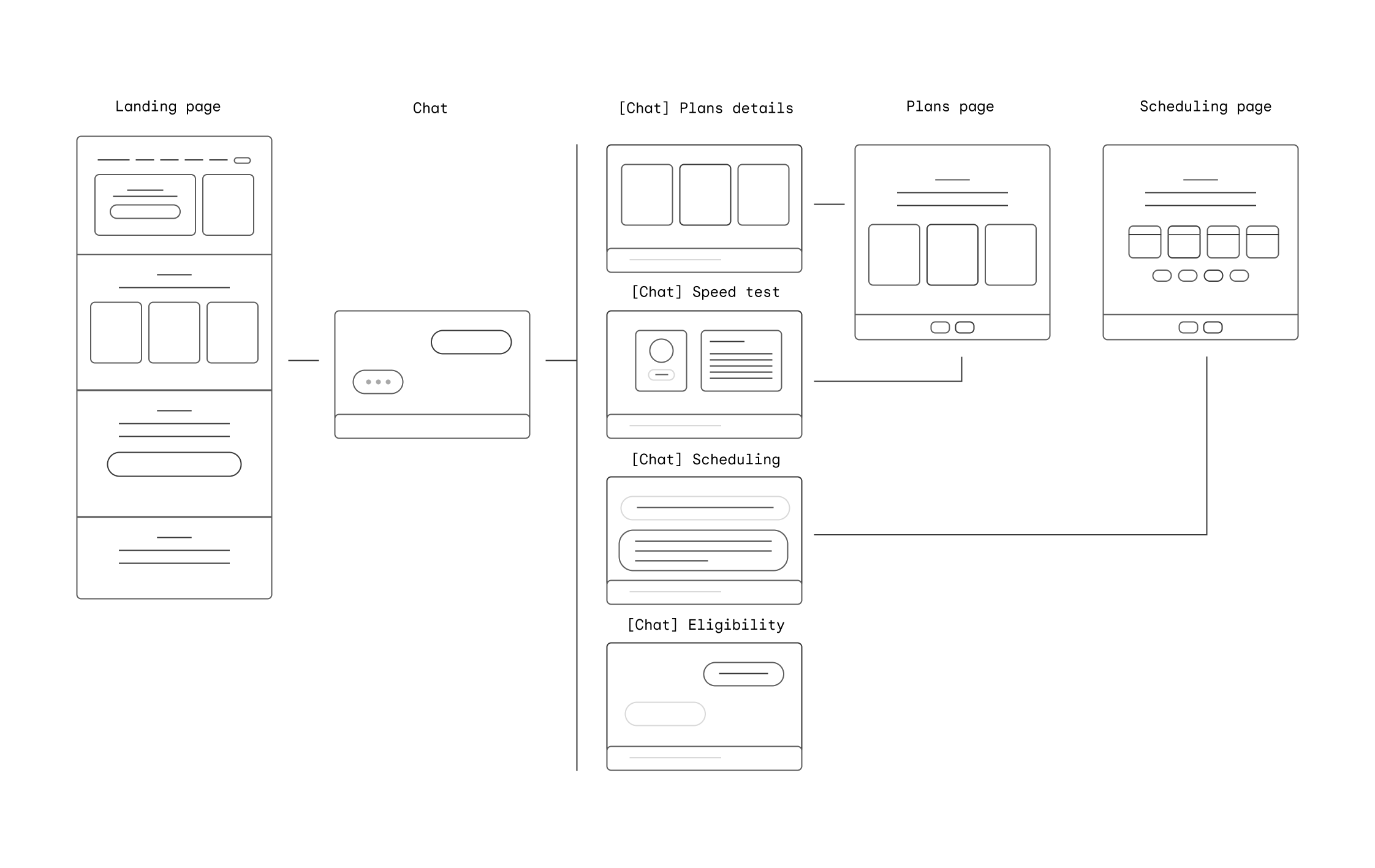
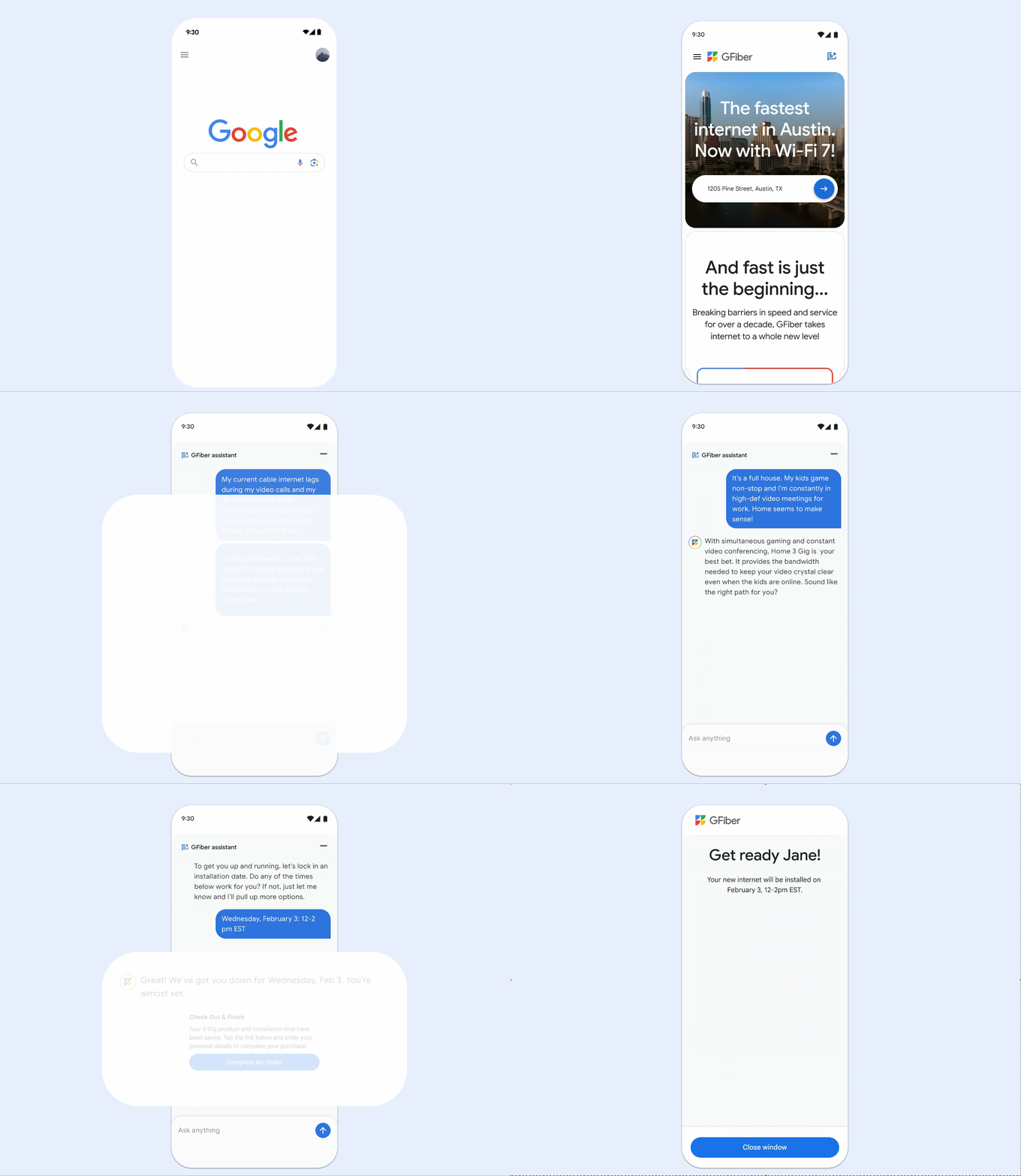
In the AI era, user expectations have shifted from simple search to active guidance. For a product as location-specific as GFiber, I am leading the strategy for a new AI agent that moves beyond basic support. My goal is to transform a complex discovery and checkout process into a seamless, guided journey that helps customers find exactly what they need.
Integrating logic before aesthetics
A meaningful AI integration requires more than just a chat interface; it requires trust. We took a logic-first approach, prioritizing the reasoning loops that make an assistant reliable. We are currently building and testing an MVP to ensure the foundation is rock-solid before layering on the final UI, ensuring the tool is as functional as it is intuitive.
Details
As the lead for the Acquisition team, I manage the end-to-end vision for this initiative. I directed external partners to establish the core reasoning engine while leading my in-house team to design the front-end layer. By bridging the gap between Engineering, Product, and Design, I ensure our AI fits seamlessly into our architecture and brand standards.
The Personality Framework
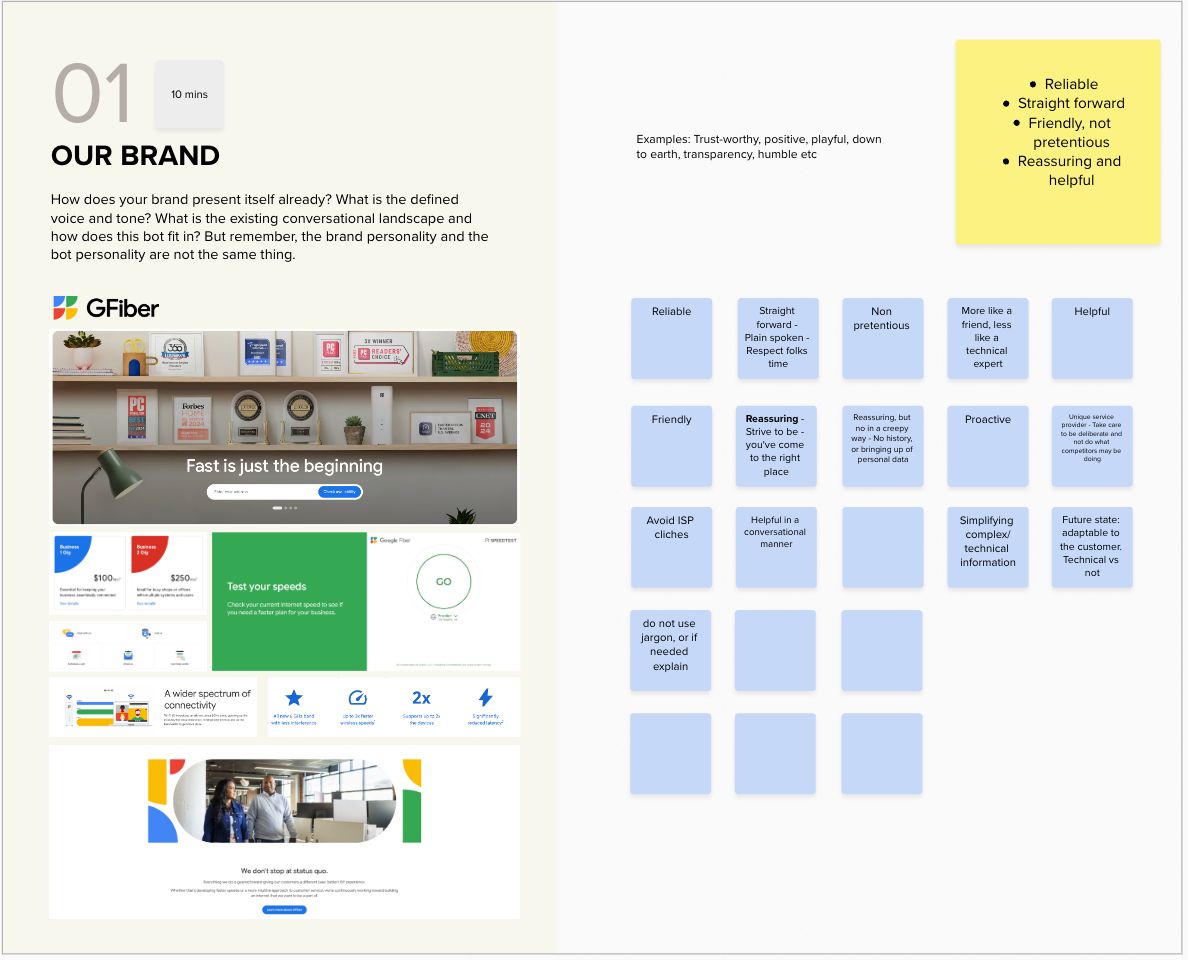
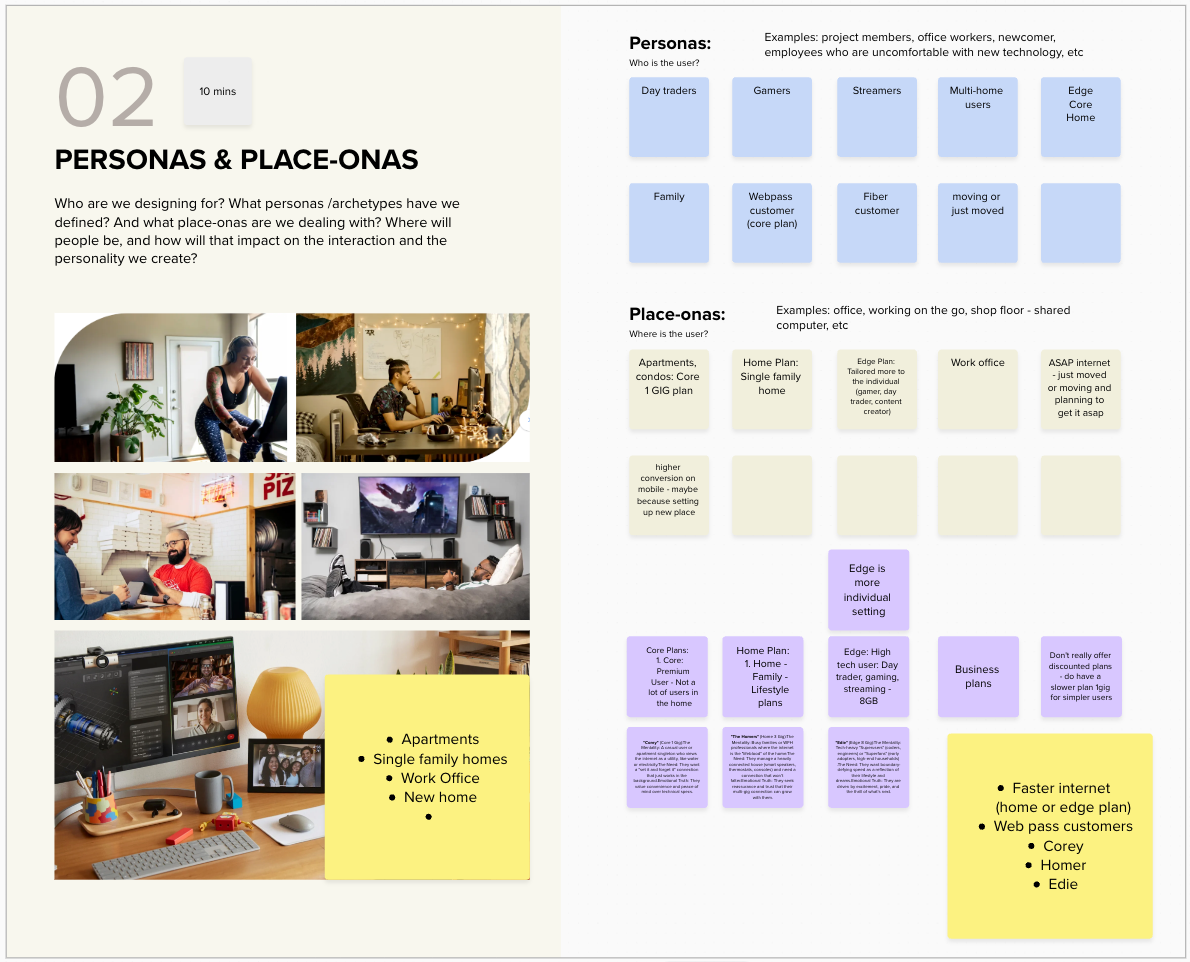
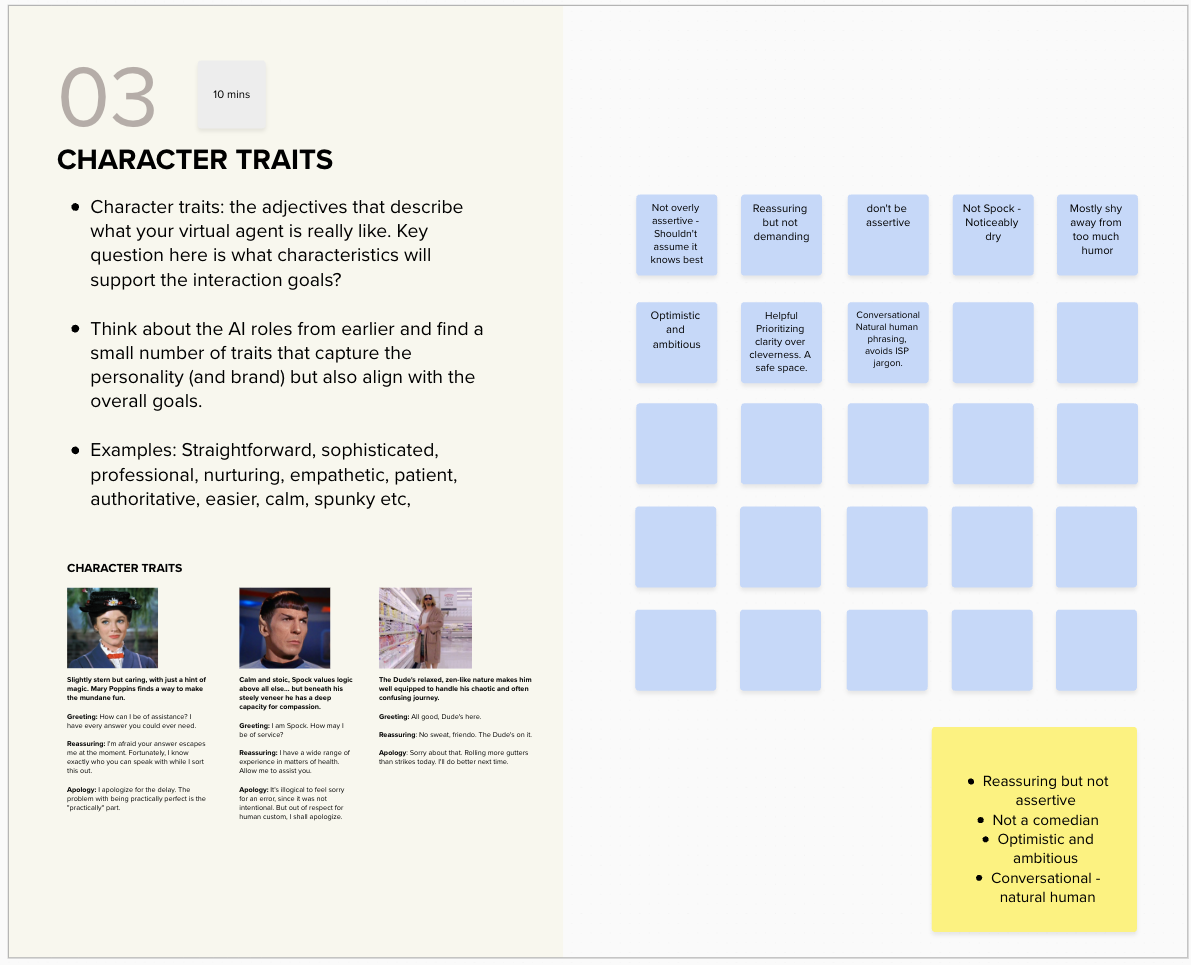
Personality is the baseline of the experience, not just an add-on. To ensure a unified voice across our internal and external teams, I established a five-pillar framework to define who our agent is. We started by understanding the materials we had to play with—our brand basics, our diverse personas, and our specific interaction goals.
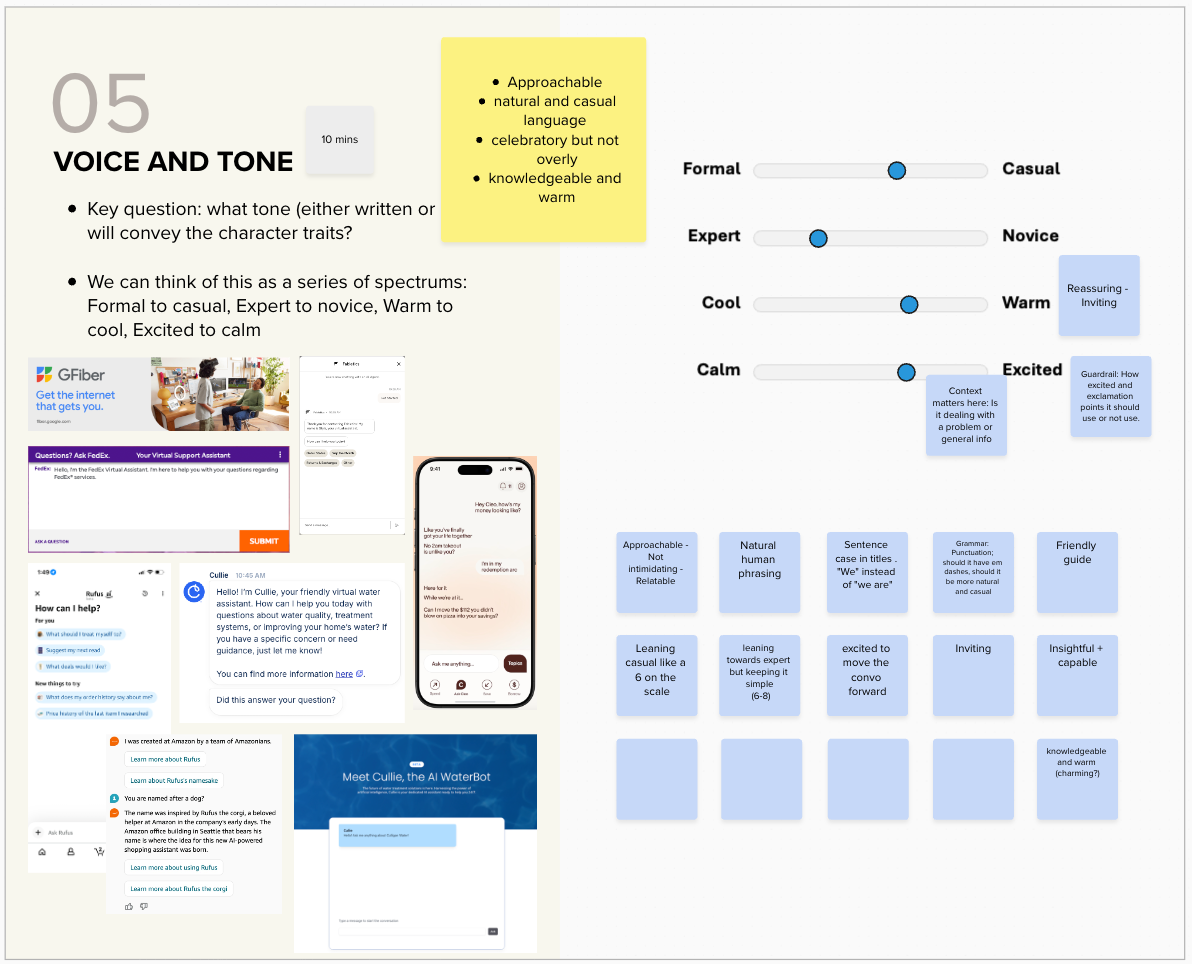
I led the team in landing on a "Reassuring Guide" persona. We deliberately chose a tone that is approachable and casual, but knowledgeable enough to handle technical billing and plan questions without feeling over-indexed on chatty personification.
Levels of Personification
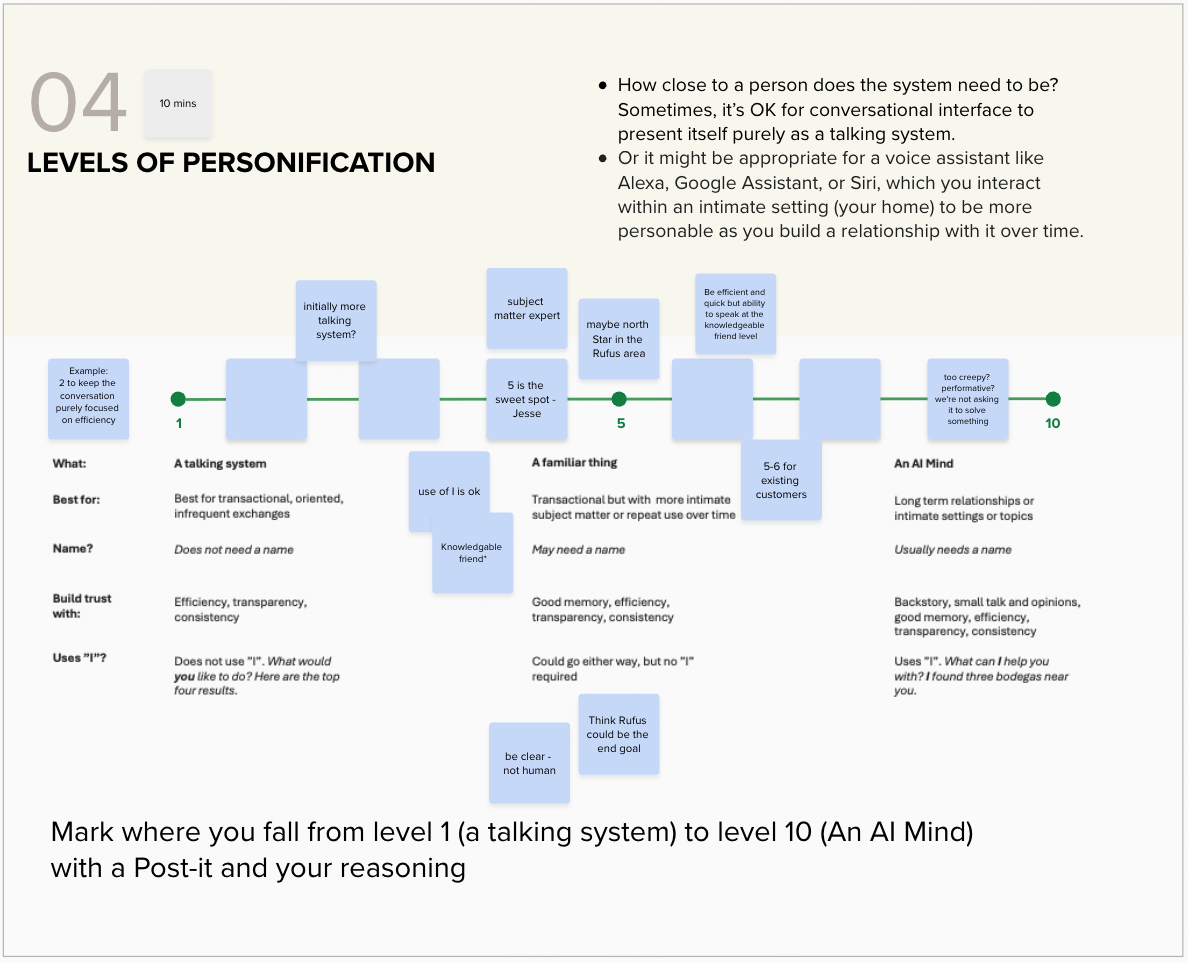
A major part of my strategy was deciding how "human" this system needed to be. I directed the team to map our goals against a spectrum, moving from a "talking system" to a "familiar guide".
By evaluating these levels, we ensured the agent stays in the "sweet spot"—personable enough to build trust during a complex checkout, but efficient enough to respect the user's time. This framework allows my in-house team to maintain a consistent voice as they build out the final front-end layer.
What’s next
As we move toward our launch, this project is serving as the North Star for how we handle Agentic AI across the organization. By establishing these initial UX standards and personality frameworks now, we’re building a foundation that our team can scale as the technology evolves.