TripAdvisor: Experiences Platform Development
TripAdvisor Experiences
In 2014, TripAdvisor acquired the company, Viator, to enter the tours and activities market. This initiated TripAdvisor’s movement to create its own space of direct listings of tours and activities; which combined, is known as Things to Do. Internally, this team rebranded as TripAdvisor Experiences, housing both Viator and TripAdvisor listings. This sector grew from 20,000 listings to now offer over 200,000 experiences.
TripAdvisor Experiences as a business unit kickstarted in April of 2018. This rebrand was primarily for an internal purposes–to help the supplier of tours and activities list their product(s). Joining TripAdvisor Experiences would let you create products–your tours, activities, or tickets–and sell them directly to the audience already on TripAdvisor or Viator.
The New Supplier Platform
With its new identity, TripAdvisor Experiences required a new supplier platform. Contrary to the old supplier extranet, this platform would give suppliers the ability to create products to sell directly through their listing—by setting pricing, availability, and itineraries. Once ready, products display across TripAdvisor, Viator, and thousands of partners. The user-friendly interface makes for easy set up with seamless connection to a supplier’s existing inventory system, helping a host increase bookings by filling last-minute and offseason slots.
See the video below for an overview of the impact of the platform leading to bookings with successful travelers and experiences.
Details
The migration from the old system and build of this new platform spanned from April 2018-March 2019. TripAdvisor Experiences’ new supplier platform is currently being used world-wide. Along the way, I have created a design language for future iterations, as well as cross-business usage for internal branding. (See here)
Role: Lead UX Designer
Design/Research Team - Myself, Erik Boman, Flavia Stoain, Jenk Constantine, Susan Mercer, Tom Loughlin
Kick Off
I was able to take on a large amount of responsibility for this Supplier Platform project. It was composed of many parts–onboarding, product details, pricing, and ticketing.
While my director oversaw all the moving parts, I was able to work with him to build out the taxonomy of the platform as well as own the challenging task of pricing.
These portions of this supplier platform were both vital. Taxonomy helped to categorize the type of experience a supplier was both listing and marketing. Pricing continuously kept a supplier competitive, and allowed flexibility based on season, time-of-day, or during a special offer.
Owning portions of the Supplier Platform meant working with engineers who were specialized in this subject matter. This was extremely helpful for not just my knowledge growth, but the product’s as well.
Ownership - Taxonomy & Pricing
Building a proper taxonomy for new suppliers was a pretty straightforward process of collecting information needed to categorize it appropriately. We realized the constraints lied with migrated suppliers, so we worked to formulate a system which predicted a segment of the product’s categorization. Though this would not automatically predict and confirm where a product may be categorized, it incrementally helped us to create a confident hypothesis–kickstarting a trustworthy platform for our suppliers at the beginning of the builder experience.
Pricing is complex. It can fluctuate dynamically, or by a supplier’s choice of seasonal or time-of-day pricing. It took understanding many different use cases. From studying industry trends to interviewing various suppliers, we grew a foundation for the basic pricing model. Then, through multiple card sorting exercises, we extracted what were top components to setting a clear view of what was offered. This started with a basic weekly scheduling methodology. From here, we realized they could set long term dates or specific one-offs that would, in the end, create a calendar (eventually, linking to availability and bookings).
Special offers were an add-on from pricing, if a supplier so wished to discount a specific period of time. Due to compliance, we encountered more hills than expected, but successfully worked around to create communicative designs that were well adopted!
Results
Migration of old suppliers and the welcoming of new suppliers started in September 2018. We completed the Supplier Platform in March 2019, allowing no existing users to use the Supplier Extranet.
Since the start, more than 150,000 experiences have been added to the new Supplier Platform; it is used worldwide–offering tours and activities in over 20 different languages. The differentiation of these vs. tours or experiences in countries with various native languages is clear due to proper taxonomy.
We’ve had success launching dynamic pricing, while keeping suppliers in charge of their seasonal and specific daily schedules.
Special offers launched in March 2019. Over 30% of users immediately adopted this, incentivizing us to create “Introductory Offers” as an add-on for the first 30 days of a new product.
The Success of TripAdvisor Experiences
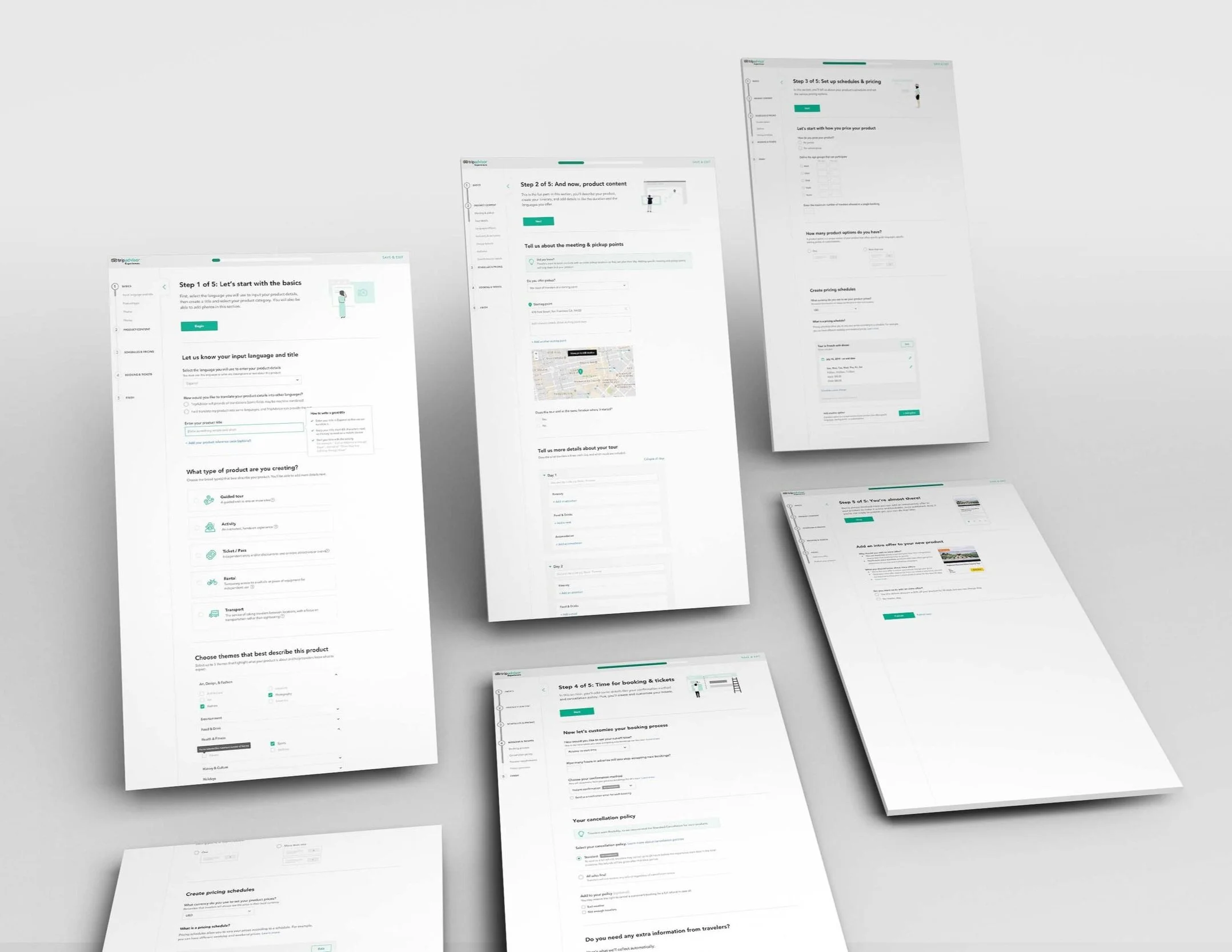
Supplier Product Builder Screens
Product Builder
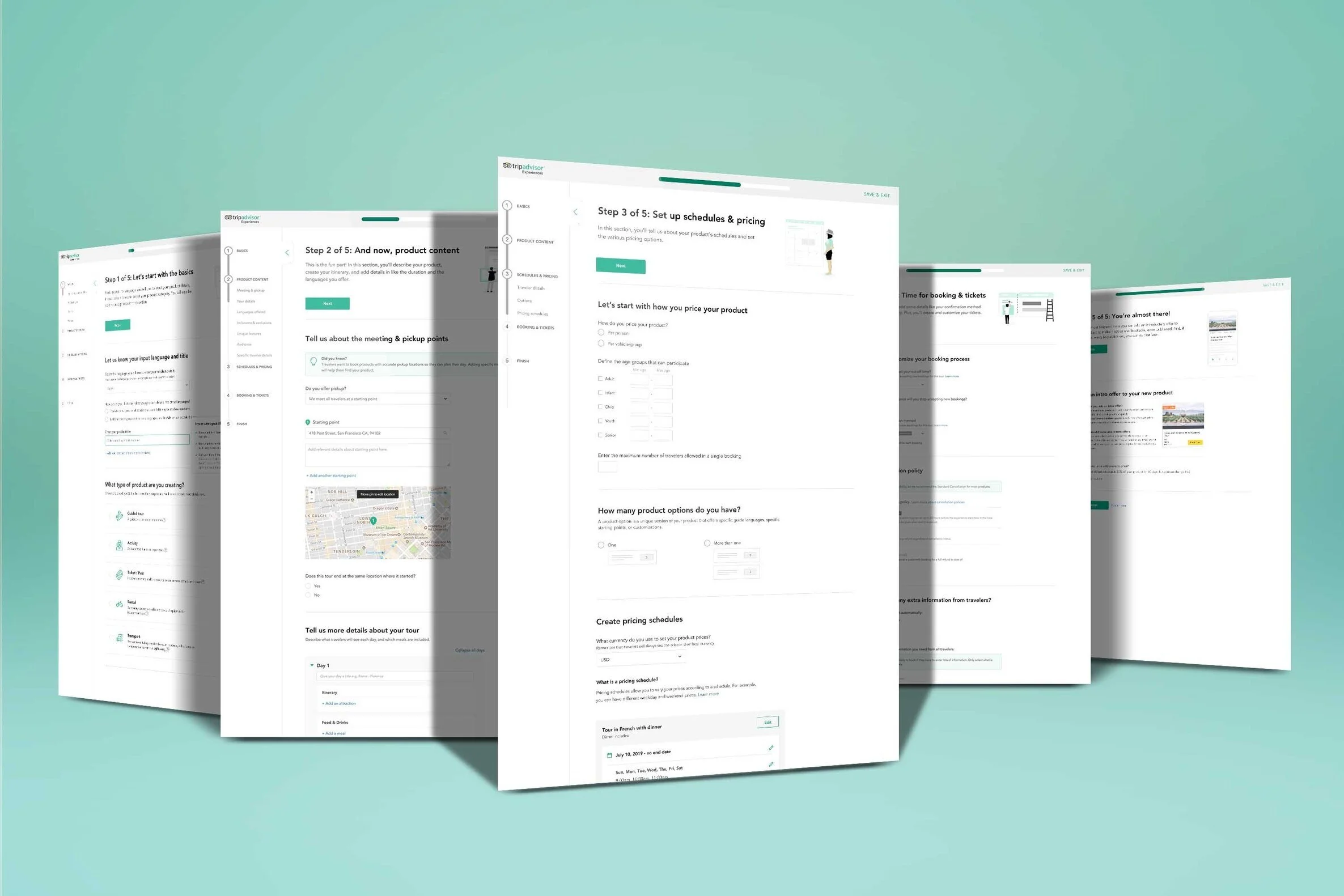
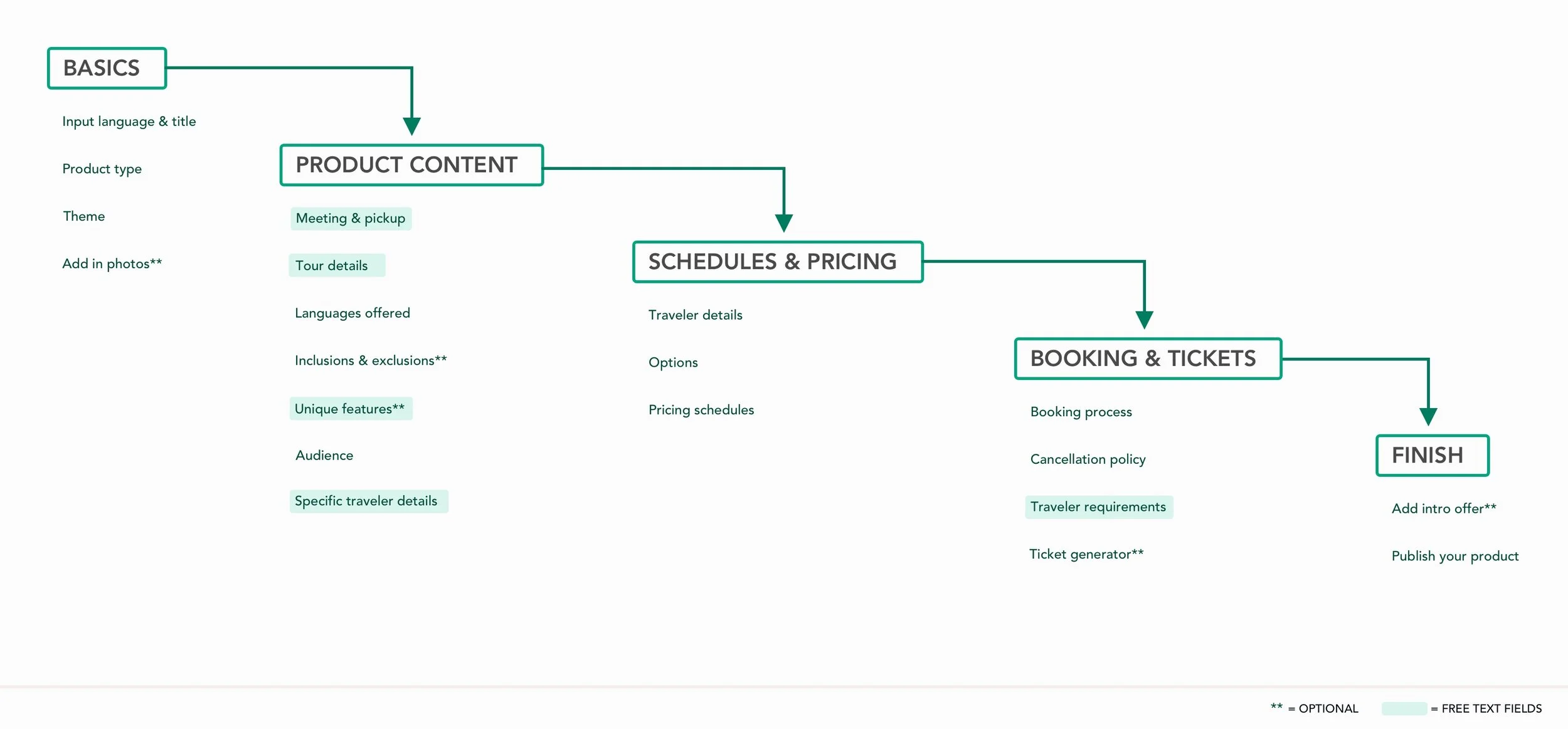
Most likely, when a traveler looks to book an experience, he or she is comparing a few different options. On the other end, the supplier offering it wants to make sure he or she is keeping up with and standing out amongst competition. To aid both sides, the new supplier platform had to provide a step-by-step process to set up a supplier’s product for success.
To achieve this goal, my team created an onboarding process, which was largely made up of a product builder for suppliers listing on TripAdvisor and Viator. It took into consideration all of the pain points travelers voiced they would want to know prior to booking a trip, and helped suppliers display various product options–ie. tours including lunch or guided in a different language.
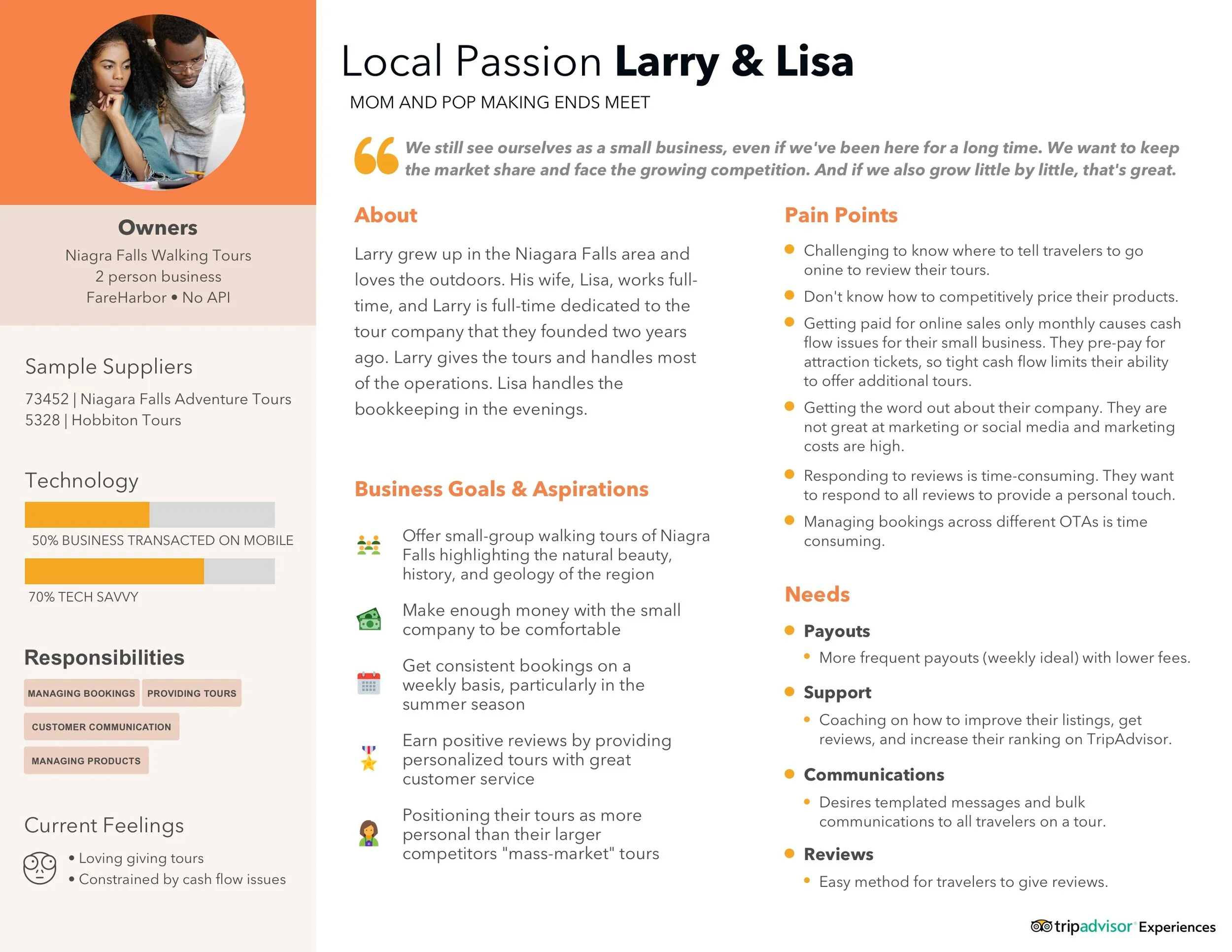
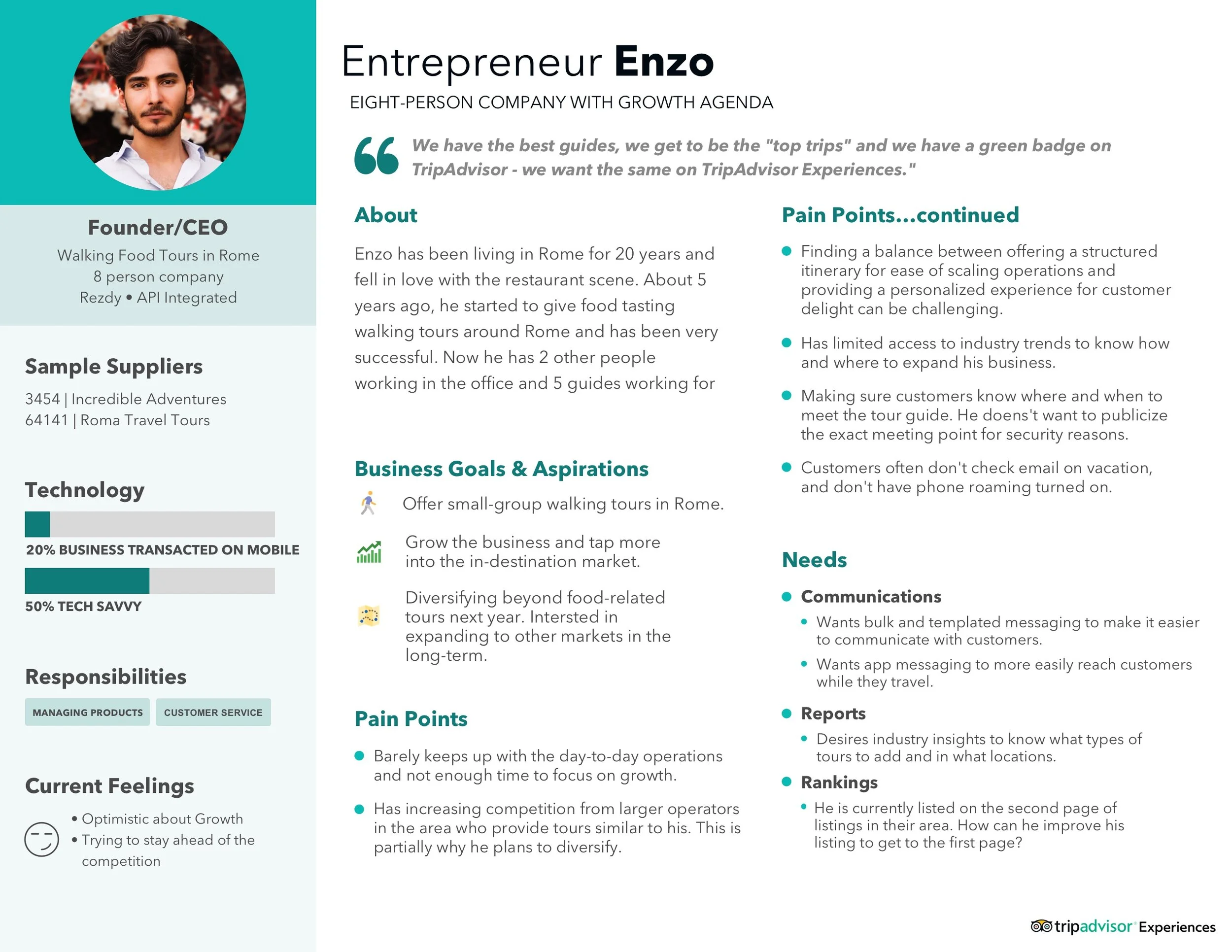
Supplier Personas
Creating the Personas
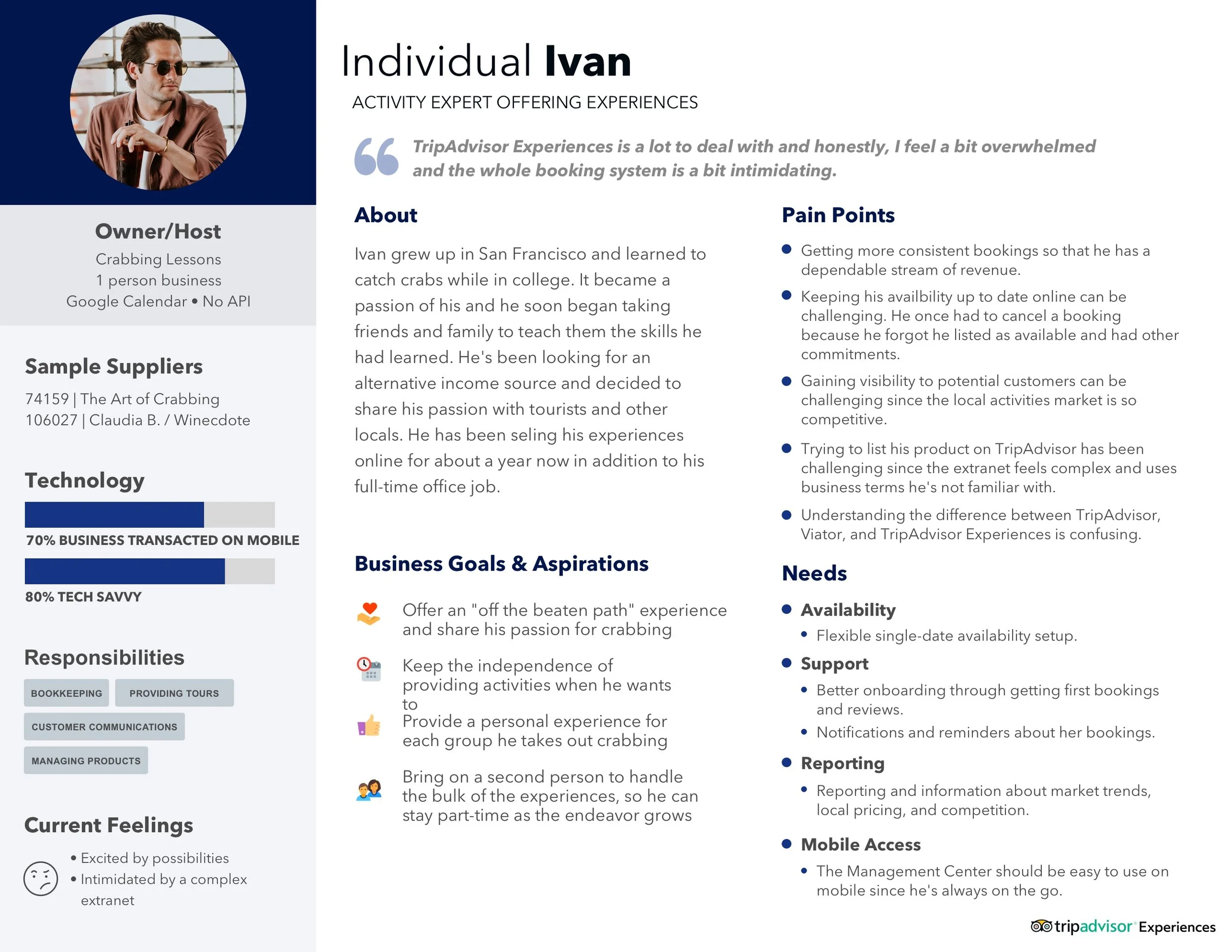
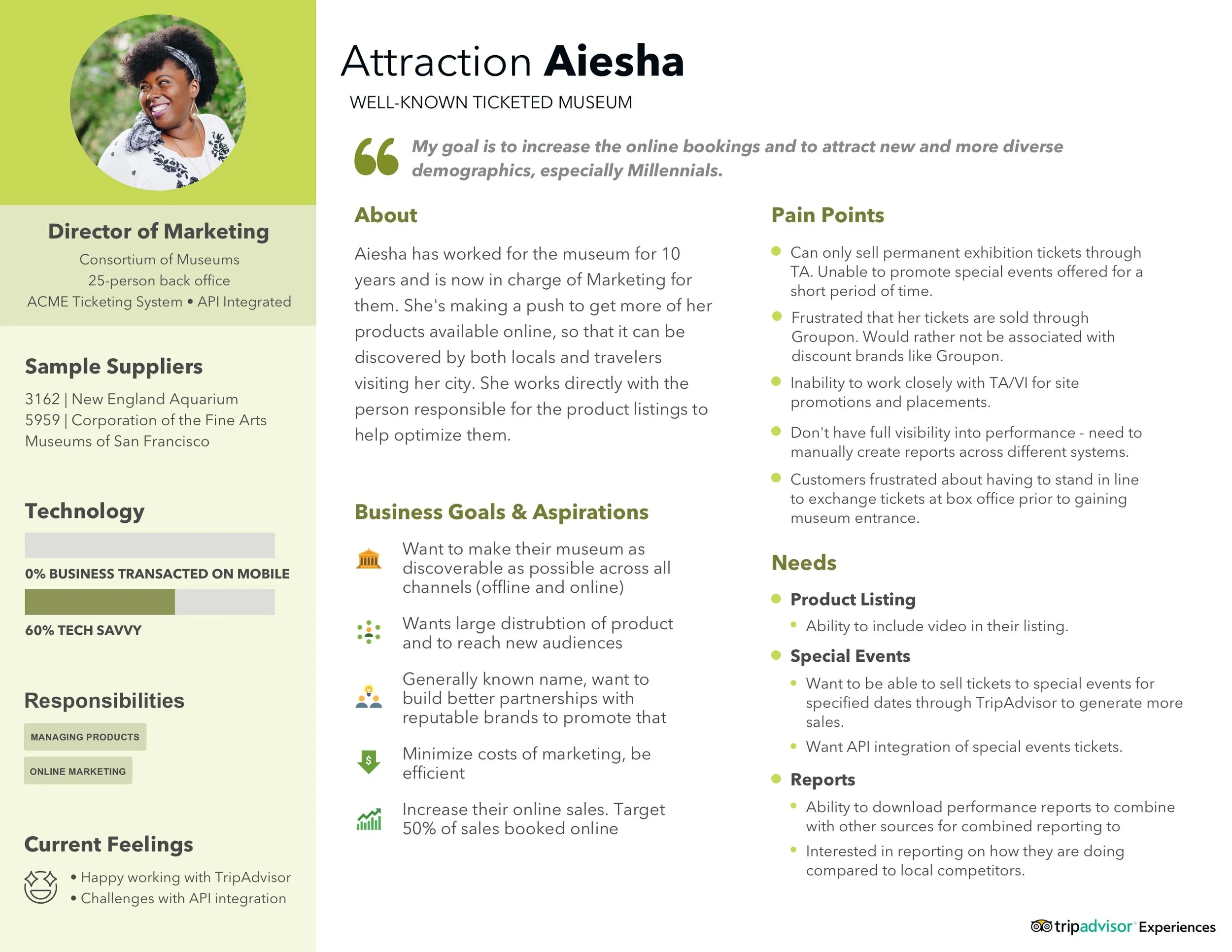
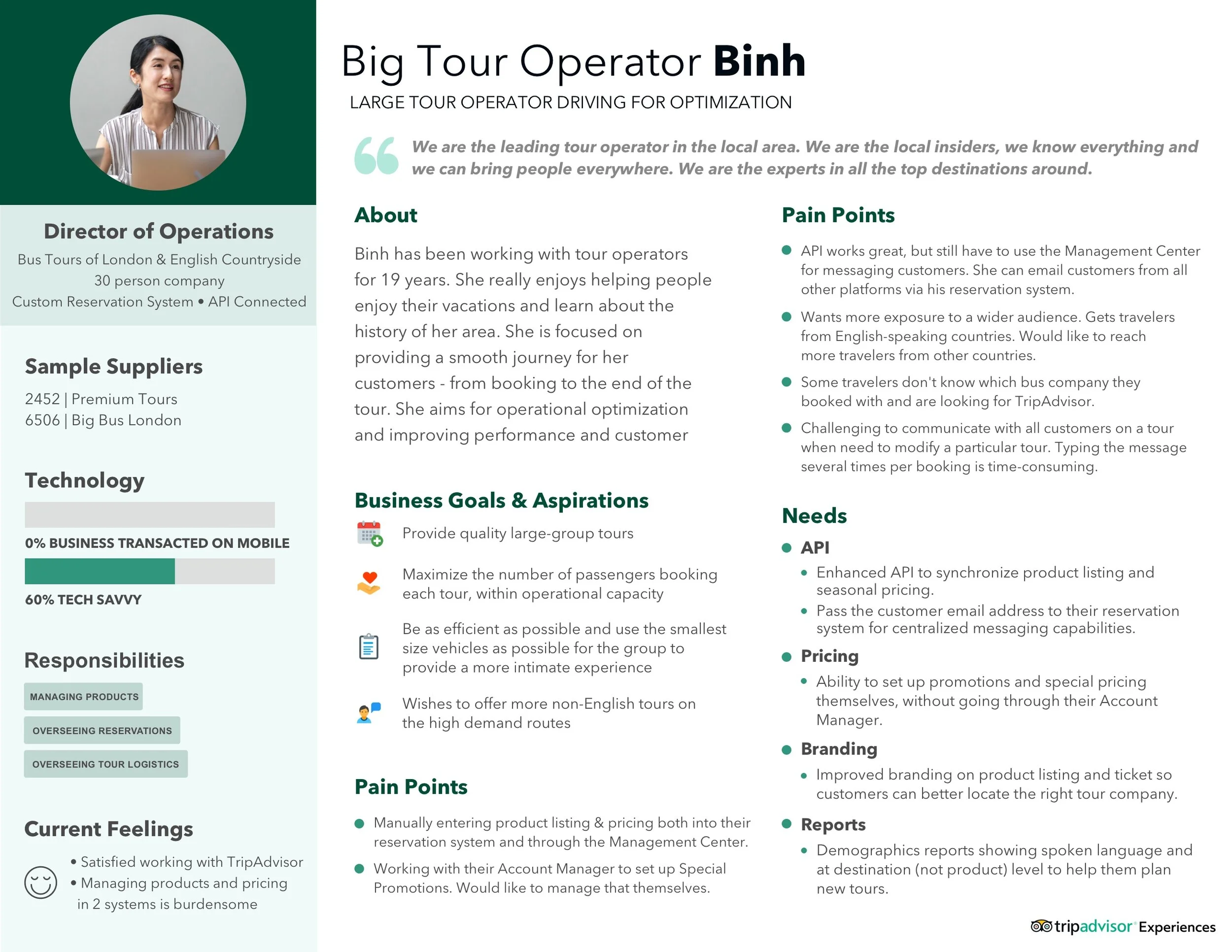
Prior to building our new supplier platform, we needed to understand who would be using it and what their goals would be. Through user interviews and supplier visits, we discovered one of the largest factors of differentiation is Operational Size (how many people work in operations for the organization); the next largest differentiation was Product Type. There were differences in needs between tours and attractions, but similarities between small tour and activity operators. Lastly, we found that the Organizational Mindset varied based on the persona. Above showcases the 5 main TripAdvisor Experiences personas we curated from all of our data.
While we formulated these personas to appropriately create the supplier platform, they are continuously considered in every product aspect–always keeping our users top of mind.
Information Architecture of the New Supplier Platform Product Builder
Supplier Extranet
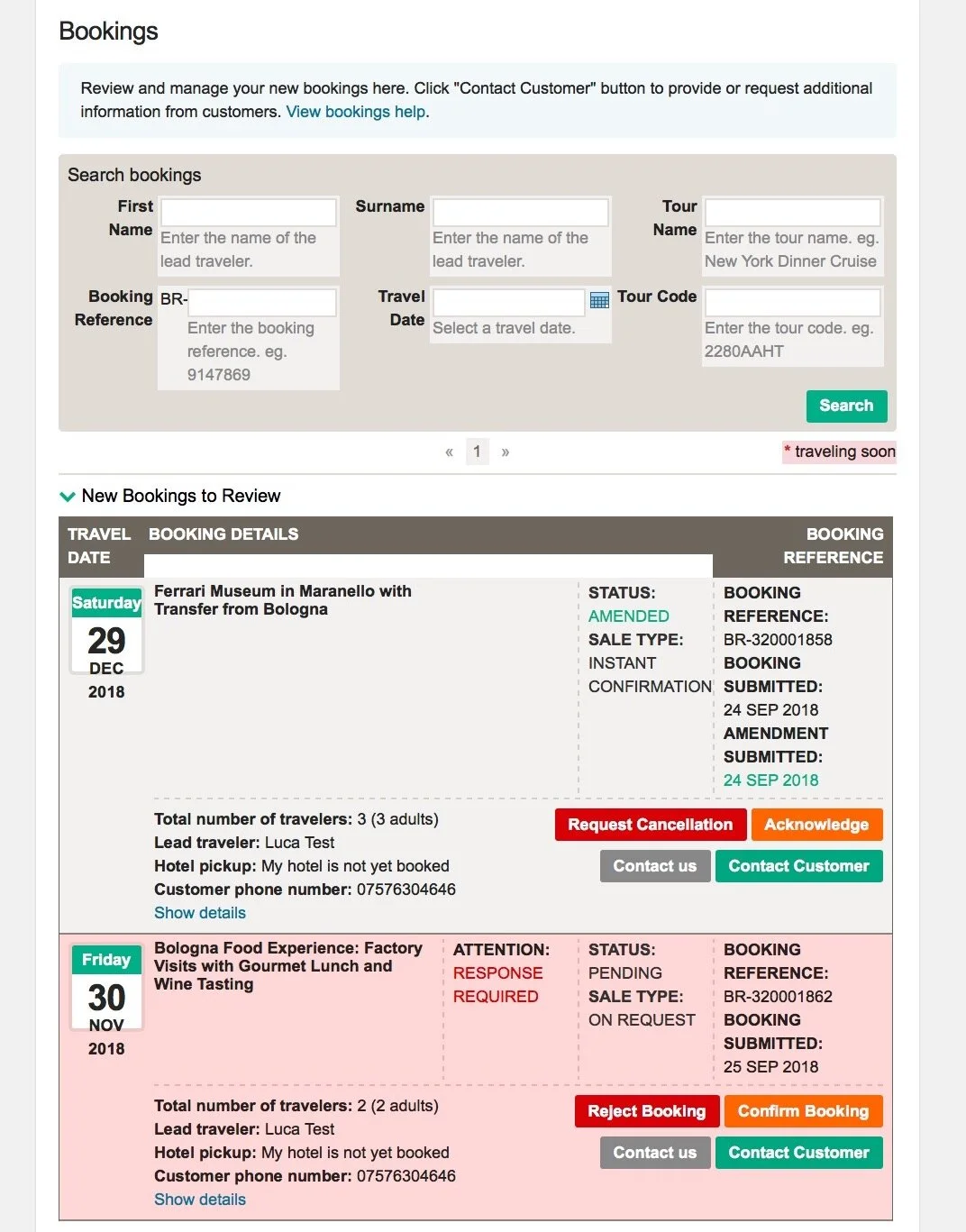
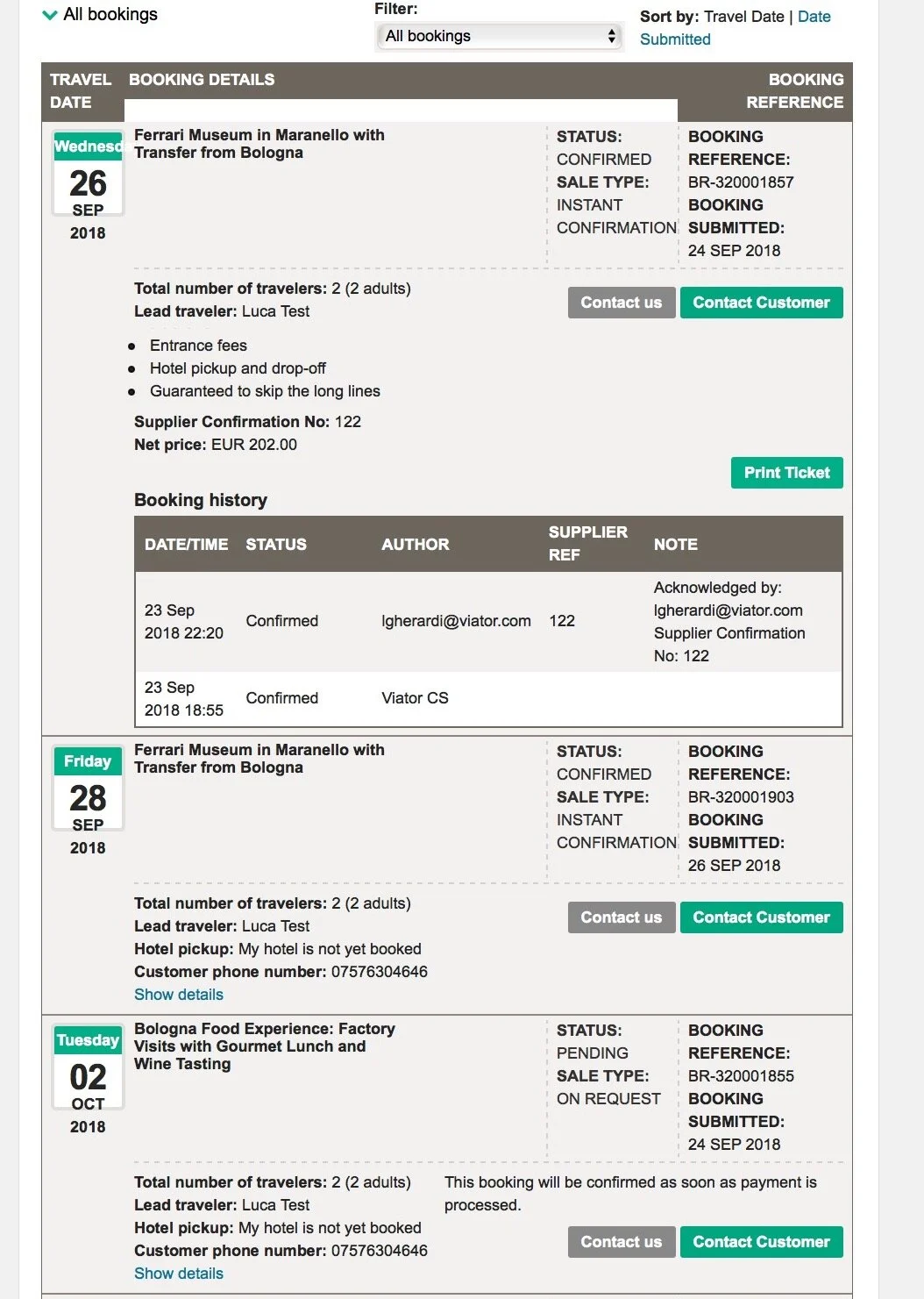
From Old to New
The new supplier platform re-invented the experience of listing a product on TripAdvisor or Viator. Suppliers formerly used a supplier extranet to both input information and verify bookings regarding their product offering (sample UI, above). From a supplier perspective, this set an expectation for a system; for our product team, this gave us a base to migrate from.
Joining the team when this kicked off, I was able to review this old system and not only learn about what was useful to keep, but also brainstorm what areas would require more detail. Through analysis of these screens and competitive research on platforms and users, we were able to formulate a new on-boarding platform that seamlessly welcomed new suppliers and migrated seasoned ones.