TripAdvisor: Platform Coaching UX
TripAdvisor Supplier Quality and Behavior
TripAdvisor Experiences (to the consumer, known as Things to Do) is made-up of over 2,000 suppliers and hosts. With a competitive travel industry, an experience’s listing quality and supplier behavior is of utmost importance.
Owing to this, there is a specific team named Supplier Quality and Behavior that is designated to aid with both. This team focuses on keeping suppliers informed on the latest trends in the market and listing requirements in order to receive traveler bookings. The approach in doing so is made up of various platform design implementations, specific communication releases, and mass surveying.
Supplier Coaching
The Supplier Quality and Behavior team worked on creating a coaching initiative to guide suppliers in the right direction. With the help of research on what travelers want and analytics on what is an industry standard, each quarter had specific priorities.
Coaching suppliers wasn’t just a to do list, it was thoughtfully and strategically spread throughout the whole experience in the supplier platform. As designers working with the team, we built an ecosystem that allowed the supplier to organically fill in gaps, improve their listings, and fulfill the goal of creating an all-star listing.
Details
This initiative is ongoing, but started out in September 2018. Supplier coaching has expanded from a small coaching card, to pointing out specific spaces that may require more attention.
Role: Designer
Design/Product Team - Myself, Cindy Zou, Jenk Constantine, Katherine Man
Kick Off
Coaching began shortly after I started at TripAdvisor. The initial plan was to make a to-do list for suppliers needing to take multiple actions. However, we soon realized this would not be the proper approach. It was another designer’s and my job to design a system that did not overwhelm a supplier, and strongly directed them to take an action.
Creating a coaching ecosystem seemed like the proper fit. This would entail strategic placement of information. If successful, suppliers would find these as tips to better their product, more than scaring them that something went wrong.
Ownership of Coaching
Considering nothing similar to this existed before, we had the freedom to design the approach and the UI for coaching.
Through conceptual testing, we learned that users spent a good amount of time reading help text. We brainstormed ways to fit this into our current layouts, and understood the steps we needed to take per the priority of a task. Visual cues helped reveal brief context before sifting through heavy text.
These discoveries allowed our modals and coaching cards to live in places that were maybe not directly next to where the action needed to be taken. We could use the different sizes and components for each task on an as-needed basis.
By formulating a standard icon pattern with directive copy, we were able to release a system that was clear and communicative. Suppliers responded very well!
Results
The specific coaching example displayed on this page had a clear goal and exceptional adoption.
We released a times coaching initiative to push suppliers to add in either specific times or opening hours for their tours, museums, and activities when they had neglected to do so prior.
Over 70% of suppliers immediately added their times in the first two weeks of release.
We noted the importance of relaying a percentage impact to suppliers, for any action taken.
Coaching in the Supplier Platform
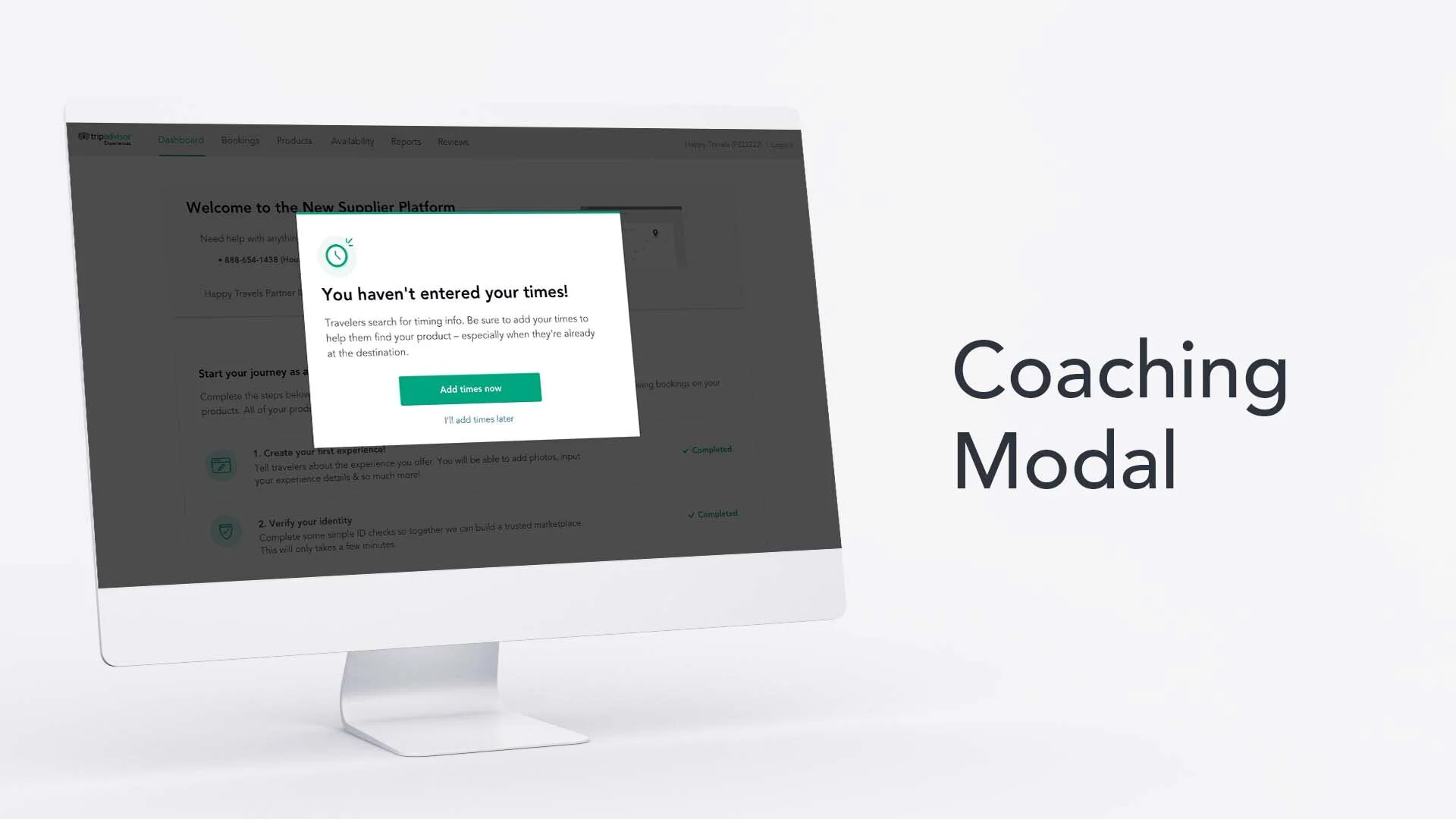
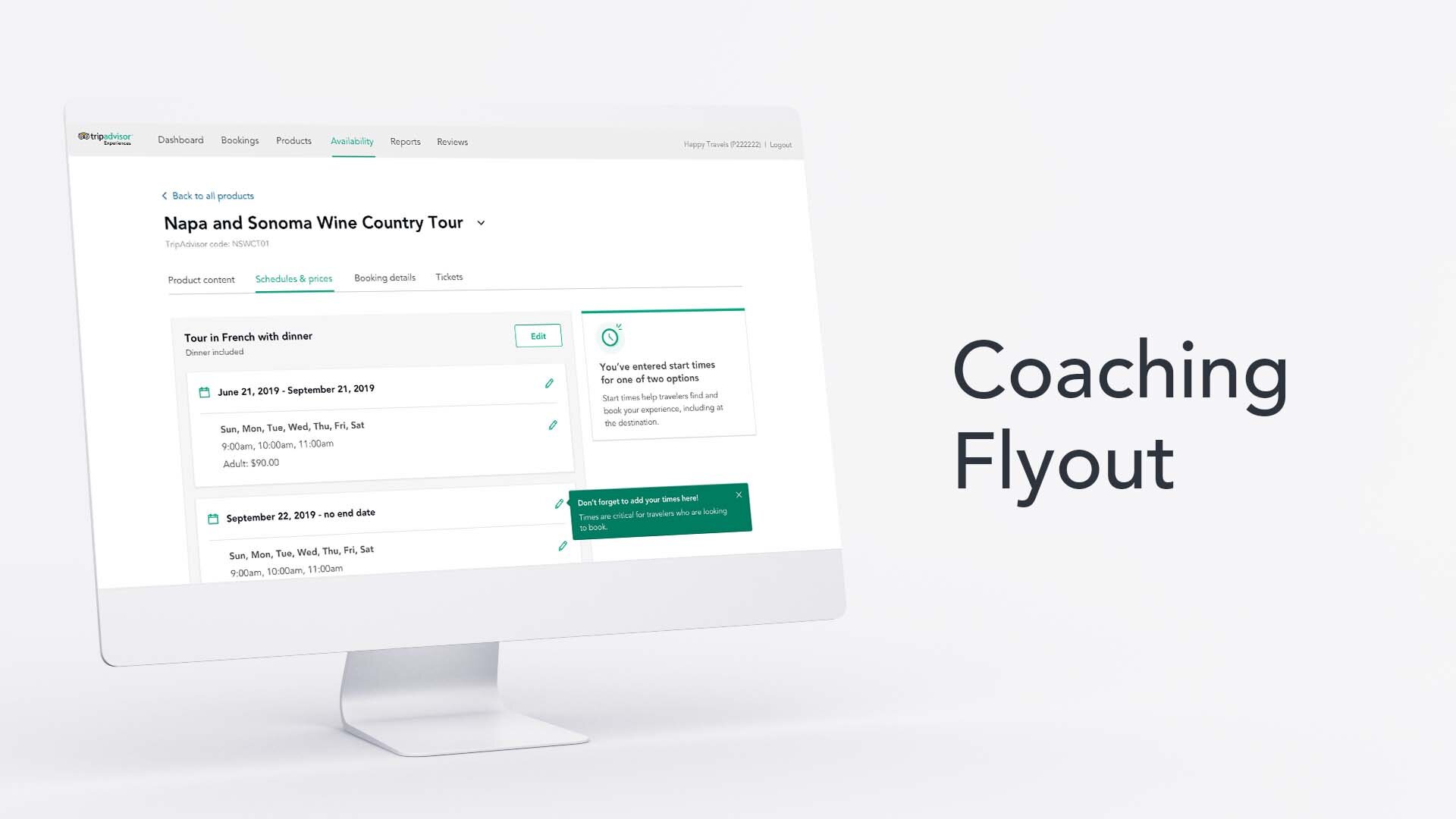
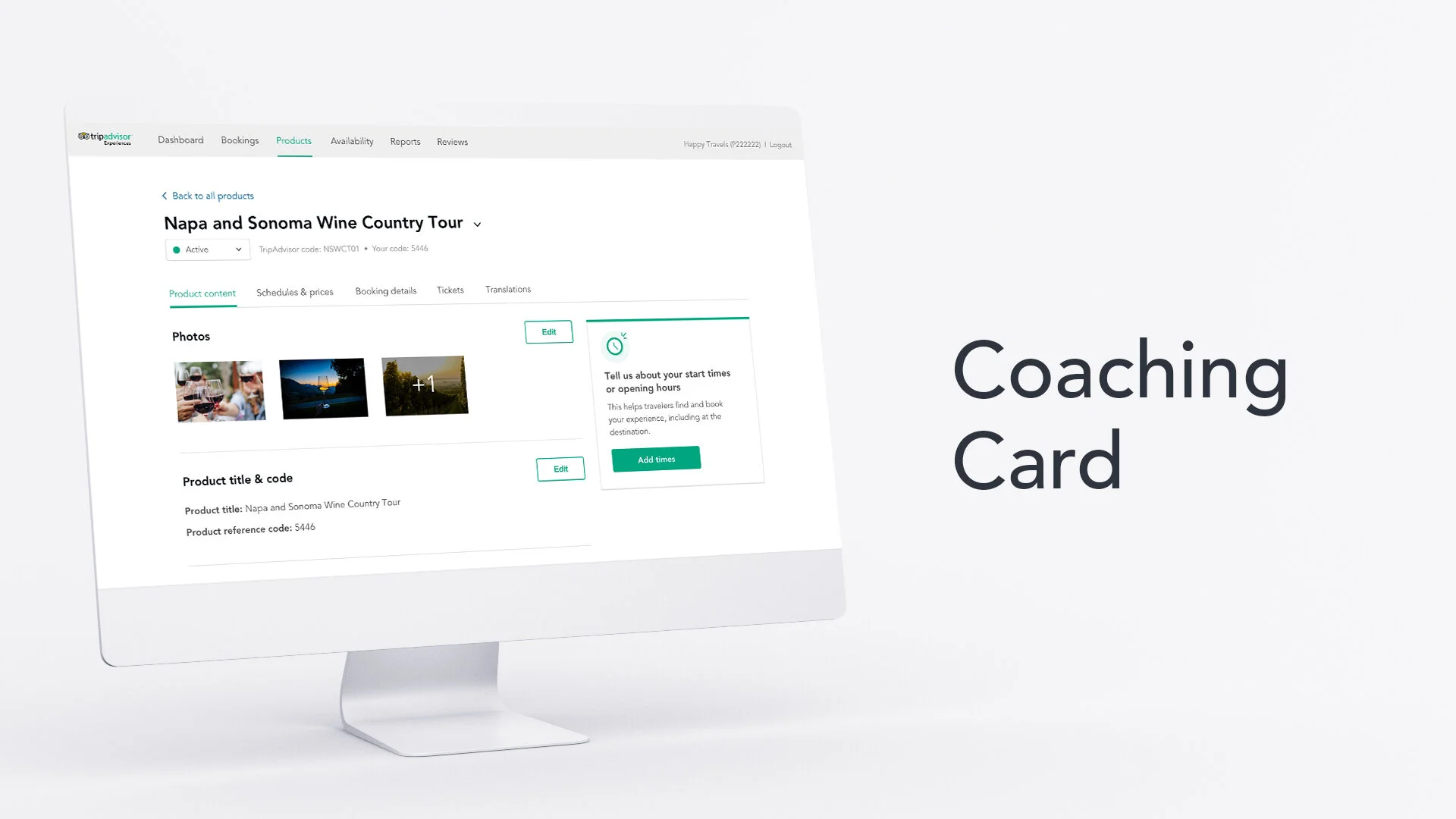
Coaching to Add in Times
Coaching originated to close the gap for suppliers who migrated from the old supplier extranet to the new supplier platform, there were gaps in the information requested or in high demand from travelers.
A vital piece of information was a start and end time to a tour or the opening hours for a museum admission ticket. This was a problem that was solved with Supplier Coaching.
As a team, we explored how to convey urgency for a supplier to take an action, seeing as the coaching initiative had prioritization. With in-line messaging existent, we had to build something more powerful.
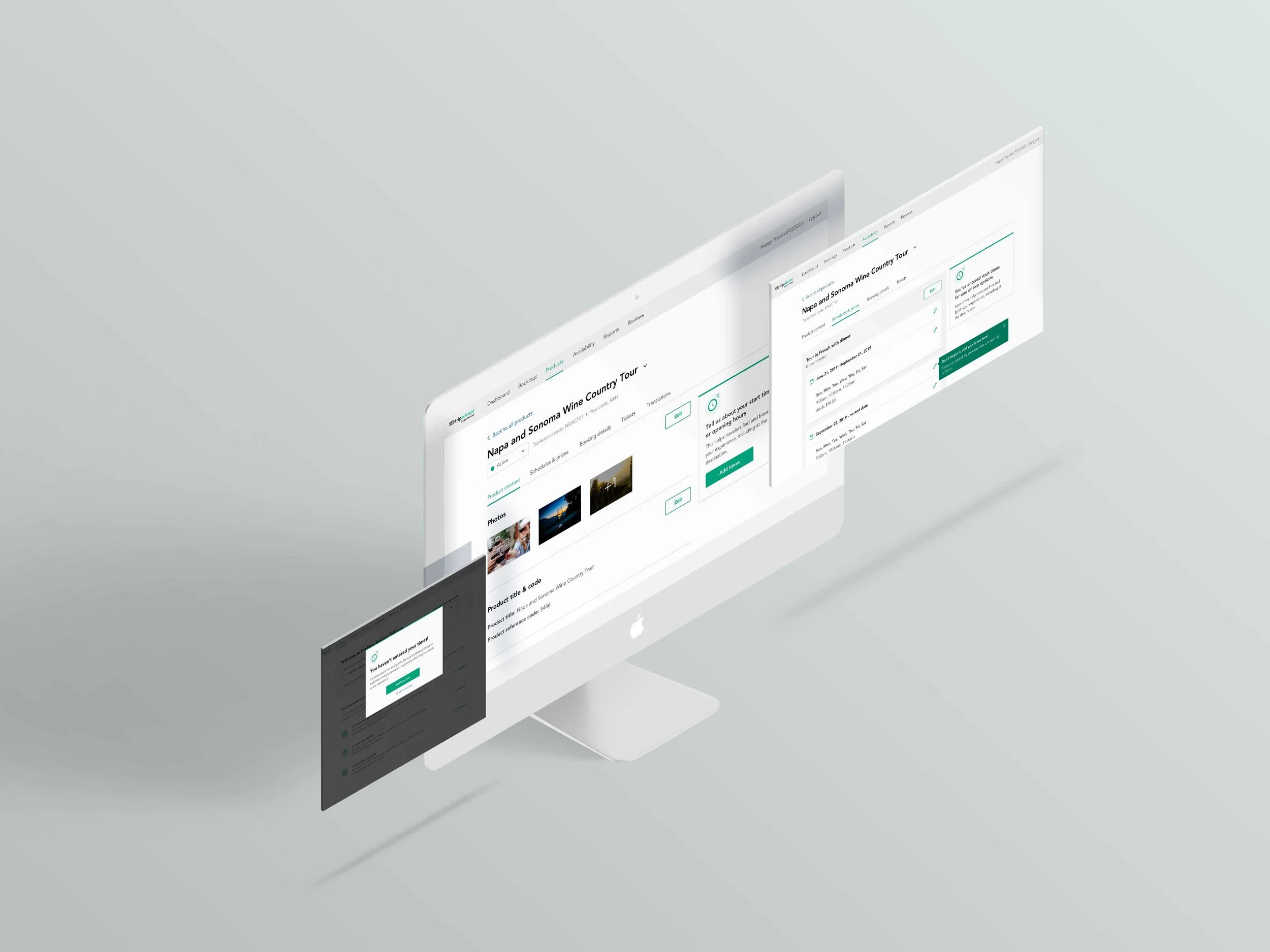
Starting with a fly-out message, moving onto a linked system of coaching modals and cards, we designed an ecosystem of different strength approaches dependent on the priority of the ask. Once we completed our set of coaching, we mapped the approaches onto a grid–impact to supplier vs. impact to the business. The above represents the outcome; the below displays the thought process.
Ecosystem of Coaching
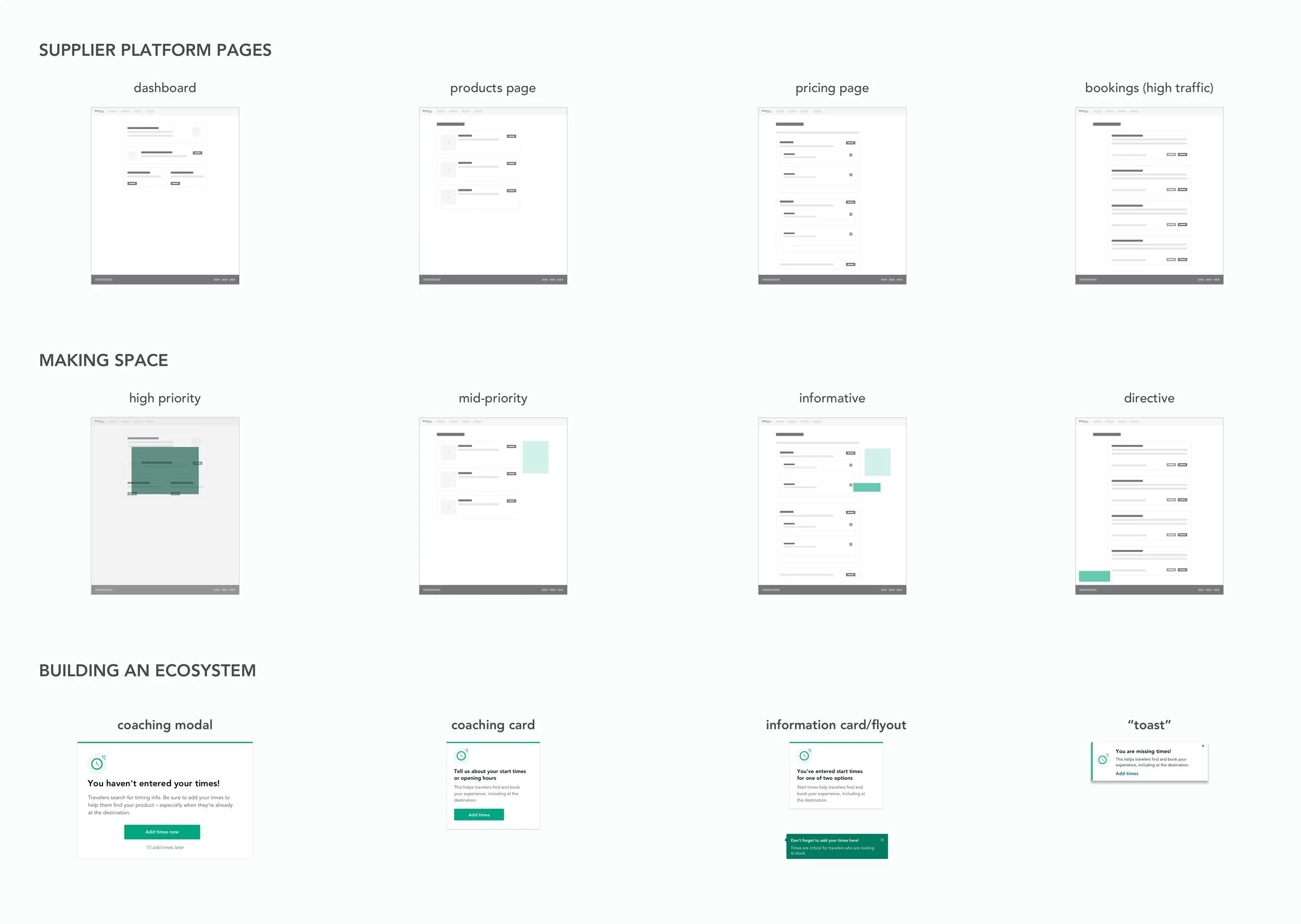
The Thought Process
As a team, we explored how to convey urgency for a supplier to take an action, seeing as the coaching initiative had prioritization. With in-line messaging existent, we had to build something more powerful.
Starting with a fly-out message, moving onto a linked system of coaching modals and cards, we designed an ecosystem of different strength approaches dependent on the priority of the ask. Once we completed our set of coaching, we mapped the approaches onto a grid–impact to supplier vs. impact to the business. The above represents the outcome; the below displays the thought process.